Golders Green House Clearance — Recycling and Sustainability
Golders Green House Clearance is dedicated to creating an eco-friendly waste disposal area and a practical, sustainable rubbish area for households and small businesses across Golders Green and the wider borough. Our mission balances efficient clearances with environmental responsibility: prioritising reuse, maximising recycling, and diverting materials from landfill wherever possible. Whether managing bulky furniture, electrical items, or household detritus, our team treats each item as a resource to be recovered, repaired or recycled rather than discarded.We set a clear recycling percentage target for every job: an initial goal of 80% recovery and recycling by weight for all household clearances, rising toward higher targets as our circular partnerships expand. That target reflects the combined outcomes of reuse, resale, materials recycling and organic waste processing. For some clearances that include a high proportion of reusable furniture or working appliances, our effective reuse pathways can push the recovered percentage considerably higher, reducing the carbon footprint of disposal activity in Golders Green.

Local transfer stations and responsible processing
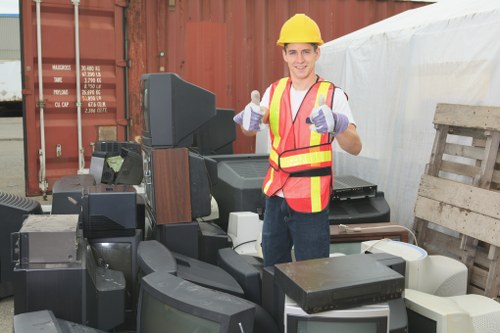
We operate with clear routes to local transfer stations and authorised recycling centres, including nearby Barnet and neighbouring borough facilities such as Hendon Transfer Station and community recycling centres found across north London. These transfer stations are chosen for their traceability and compliance with London waste regulations and the boroughs' approach to waste separation. We log material streams and ensure mixed recyclables, glass, metals, paper and textile loads are submitted to certified processors to maximise diversion from landfill.Our work aligns with the London Borough of Barnet and neighbouring councils, which encourage separation of paper and card, glass, tins and cans, mixed dry recycling and organic food and garden waste. We support household sorting when possible and provide on-site triage during clearances: metal, timber, glass, paper, electrical items and batteries are separated at source, with contaminated waste directed to appropriate treatment. This approach increases the proportion of material that meets recycling specifications at transfer stations and local Materials Recovery Facilities (MRFs).
Partnerships with charities and social reuse
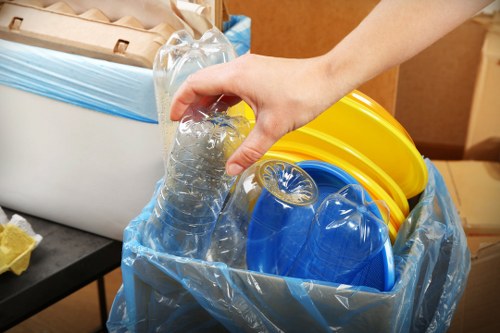
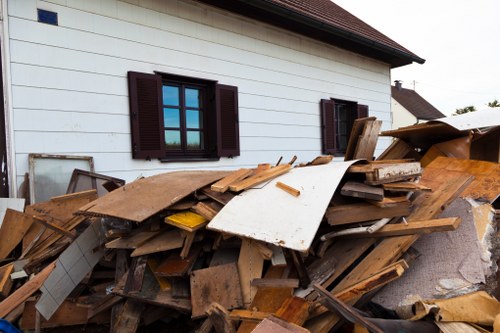
Reuse is central to our sustainable rubbish area strategy. We partner with local charities and social enterprises across Golders Green and Barnet to channel serviceable furniture, clothing and household goods to people in need. Items that are fit for reuse are offered to charity partners first; unsold or unsuitable items are then evaluated for refurbishment, parts recovery or recycling. These partnerships reduce disposal costs, support local community groups and extend the life of household goods.For electrical items, white goods and electronics we work with authorised WEEE processors that comply with producer responsibility rules. Mattresses are managed through licensed recyclers that separate foam, springs and fabric for reuse and energy recovery where recycling is not possible. For bulky timber and construction waste from small renovation clearances, we prioritise salvage for reclamation yards before considering energy recovery or accredited recycling routes.
 Low-carbon vans and efficient logistics are part of our sustainable service model. Our fleet includes hybrid and electric low-emission vans that reduce CO2 and NOx emissions in the densely populated Golders Green area. Route optimisation software reduces mileage and idling, while consolidated collections ensure fewer journeys. We report vehicle emissions as part of our sustainability monitoring so clients can understand the environmental benefits of using low-carbon house clearance services in Golders Green and adjacent neighbourhoods.
To promote transparency and continuous improvement we maintain a simple reporting framework for each clearance, documenting weights and destinations for reuse, recycling and residual waste. This allows us to measure performance against our 80% recycling target and set staged improvements. Where possible, we offer customers the option to prioritise charity donation, local reuse, or maximum recycling — reflecting a flexible approach that recognises differing client priorities while maintaining strict environmental standards.
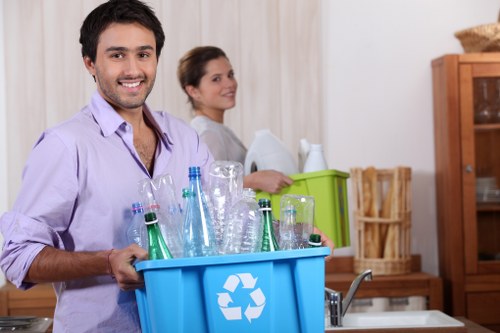
- What we recycle: furniture for reuse, textiles, paper and card, glass, metals, WEEE, batteries and garden waste.
- How we operate locally: liaison with Barnet council collection guidance, partnerships with community recycling centres and transfer stations.
- Our commitment: continual reduction of landfill, increasing community reuse and adoption of greener transport.
Community and circular economy benefits
Our sustainable model supports local circular economy outcomes: items retained in circulation reduce demand for new products, lower embodied carbon, and support local repair and reuse businesses. We work with Barnet-based charities and regional recyclers to create jobs, deliver affordable furniture and reduce waste inequality. Through these efforts, house clearance Golders Green residents receive is more than removal — it is practical stewardship of community resources and environmental responsibility.Continuous improvement and commitments
We monitor progress against our targets and publish internal reviews to refine logistics, extend charity networks and improve separation practices. Future steps include expanding electric vehicle uptake, piloting battery and hazardous waste collection for safe disposal, and increasing our reuse resale channels. Golders Green clearance services that prioritise sustainability are achievable through cooperation between residents, councils and responsible waste professionals.By choosing a Golders Green House Clearance service with a focus on an eco-friendly waste disposal area and a sustainable rubbish area, households support local environmental goals and contribute to a cleaner, greener neighbourhood. Our blend of charity partnerships, traceable transfer station use, ambitious recycling percentage targets and low-carbon vans makes that choice both responsible and effective.